Smart Lighting Routines for Sleep, Focus, and Waking Up
Smart bulbs are more useful as a schedule than as a party trick. Here is how to build lighting routines that help you wind down at night, stay focused during the day, and wake up more gently in the morning.
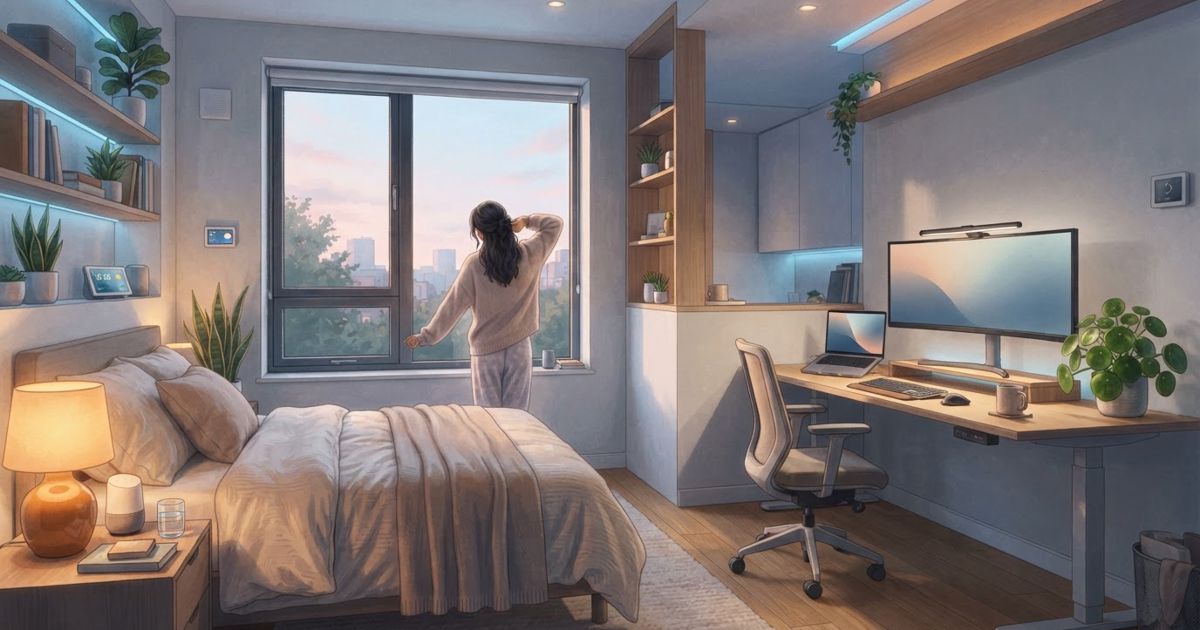
Table of contents
Most people buy smart bulbs for the colors and end up leaving them on plain white. That is a shame, because the real value of smart lighting is not the rainbow — it is timing. Light is one of the strongest signals your body uses to decide when to feel alert and when to feel sleepy. When you put your lights on a schedule that follows that natural rhythm, the effect is subtle but genuinely useful: easier evenings, sharper afternoons, and mornings that feel less like a fight.
This guide walks through three routines worth setting up — wind-down, focus, and wake-up — and how to make them run on their own so you never have to think about them again.
Why color temperature matters more than color
The single most important control on a smart bulb is not the color wheel. It is the white balance, usually measured in kelvin. Lower numbers look warm and orange, like a sunset or a candle. Higher numbers look cool and bluish, like midday sun or an overcast sky.
The general principle is simple:
- Warm, dim light in the evening signals to your body that the day is ending.
- Cool, bright light during the day supports alertness and concentration.
- A gradual shift between the two feels more natural than a hard switch.
You do not need to memorize exact numbers. Most lighting apps label their presets with names like "relax," "read," "concentrate," or "energize," and those labels map onto warm-to-cool fairly reliably. If you want to keep it simple, just remember: warmer and dimmer as the day winds down, cooler and brighter when you need to be sharp.
The wind-down routine
The goal here is to make your home quietly encourage sleep in the last hour or two before bed.
Set an automation that begins in the evening and slowly lowers both brightness and color temperature. Rather than one abrupt change, aim for a gentle fade so the room feels like it is naturally settling down. A few practical touches:
- Exclude any lights you actually need to be functional, such as a bright bathroom for teeth-brushing.
- Keep the very warmest, dimmest setting for the last stretch before bed, especially in the bedroom.
- If you read at night, a warm low-brightness "reading" scene on a single lamp is far kinder than an overhead light.
The point is not to sit in near-darkness. It is to stop flooding your eyes with the kind of bright, cool light that tells your brain it is still midday.
The focus routine
During work or study hours, you want the opposite: cooler, brighter light that helps you stay awake and attentive. This is especially valuable in a home office or any room without much natural daylight.
Create a "focus" scene that sets your main work lights to a bright, neutral-to-cool white. Then decide how it should trigger. Two reliable options:
- Schedule it for your usual working hours on weekdays.
- Trigger it manually with a button or voice command when you sit down to concentrate.
A nice refinement is to let daylight do some of the work. If a room gets plenty of afternoon sun, you may not need full brightness until later in the day. You can build this by hand into a schedule, or lean on presence and light-level sensors if you want it to adapt automatically. Our guide to smart sensors explains which sensor types make this kind of automation possible.
The wake-up routine
A sunrise-style wake-up is one of the most rewarding smart-home automations you can set up. Instead of jolting awake to a bright light or a loud alarm, the room slowly brightens over several minutes, easing you toward waking.
To build it:
- Pick the bulb or lamp closest to where you sleep.
- Set it to start very dim and warm, then gradually increase brightness and shift toward a cooler, more energizing white.
- Begin the fade before your alarm so the light leads and the alarm becomes a backup rather than the main event.
If you share a bedroom with someone on a different schedule, a small bedside lamp aimed away from your partner works better than a bright overhead fixture. And if your mornings vary, tie the routine to your alarm rather than a fixed clock time where your system supports it.
Making routines run on their own
A routine you have to trigger by hand is a routine you will eventually stop using. The whole benefit of smart lighting is that it happens without you. A few habits keep these automations dependable:
- Prefer schedules and sensors over voice. Voice is great for one-off changes, but a routine that depends on you remembering to say something will drift.
- Group your lights sensibly. Define rooms or zones so a single automation can address "bedroom" or "office" instead of a list of individual bulbs.
- Keep manual override easy. There will be nights you stay up late or mornings you sleep in. Make sure a wall switch, button, or quick app tap can pause or change the scene without breaking the schedule permanently.
If you find your automations firing at the wrong time or not at all, it is usually a setup issue rather than a hardware fault. Our smart home troubleshooting checklist covers the common culprits, and the broader principles in how to create useful automations instead of gimmicks apply directly here.
Start small and let it grow
You do not need to wire your whole house for this to be worthwhile. Start with one room and one routine — usually the bedroom wake-up, since it delivers the most obvious payoff. Live with it for a week, adjust the timing and brightness to your taste, then add the wind-down and focus routines once the first one feels natural.
Done well, smart lighting stops being a gadget you show off and becomes something you barely notice — which is exactly the point. If you want more ideas on using light thoughtfully rather than flashily, see our roundup of smart lighting ideas that make a home feel better, not busier.