How to Create Useful Automations Instead of Gimmicks
The best smart-home automations disappear into the background. Learn practical routines for lights, locks, sensors, and notifications that save effort instead of demanding attention.
Table of contents
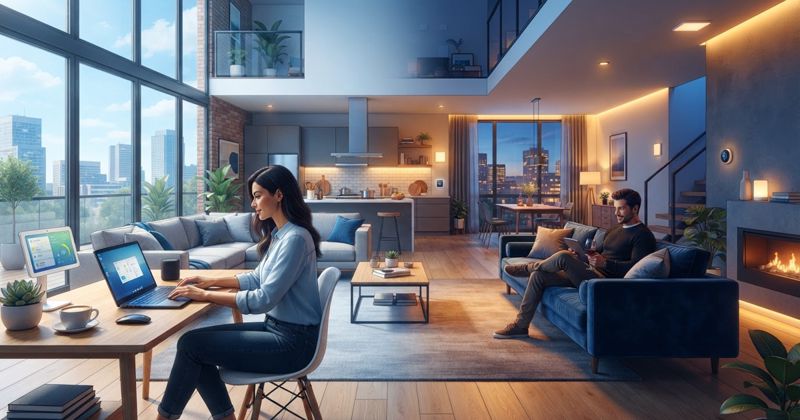
The fastest way to lose interest in a smart home is to fill it with automations that are clever for a week and annoying forever. A light that flashes when it rains is a party trick. A hallway that lights itself dimly at 2 a.m. so nobody trips is a genuine improvement you stop noticing because it just works. This guide is about building the second kind: routines that quietly remove friction instead of adding it.
The test every automation should pass
Before you build anything, hold it to one question: does this save effort or reduce a real risk, every time, without me thinking about it? Good automations are invisible. Gimmicks demand attention, break in edge cases, or do something you then have to undo. If you find yourself fighting an automation more than once, delete it.
The best routines also fail gracefully. A light that turns on with motion is helpful; one that turns off on a motion timer while you are sitting still in a room is infuriating. Always ask what happens in the awkward case, not just the demo case.
Lighting that follows you
Lighting is where automation pays off first. A few patterns that hold up:
- Motion-triggered hallways, closets, and bathrooms, with a generous timeout so lights never drop while someone is present.
- Sunset-based outdoor and accent lights, so the front of the house lights up as it gets dark without a fixed clock time that drifts with the seasons.
- A gentle night mode: motion at night brings lights up to a low, warm level rather than full brightness.
Tie these to presence and time of day, not just motion alone, so a room behaves differently at noon than at midnight.
Locks, doors, and leaving the house
Door and lock automations should lean toward safety and confirmation, not full autonomy. Useful versions include auto-locking the door after a set period unlocked, sending a notification if a door is left open, and a single "leaving" routine that locks up, turns off lights, and drops the thermostat. Be cautious with auto-unlocking on approach for a front door — convenience there carries real security weight, so many people keep unlocking a deliberate action.
Sensors that make the rest work
Most genuinely useful automations are powered by cheap sensors doing unglamorous jobs:
- Contact sensors on doors and windows for security alerts and "did I leave the garage open" notifications.
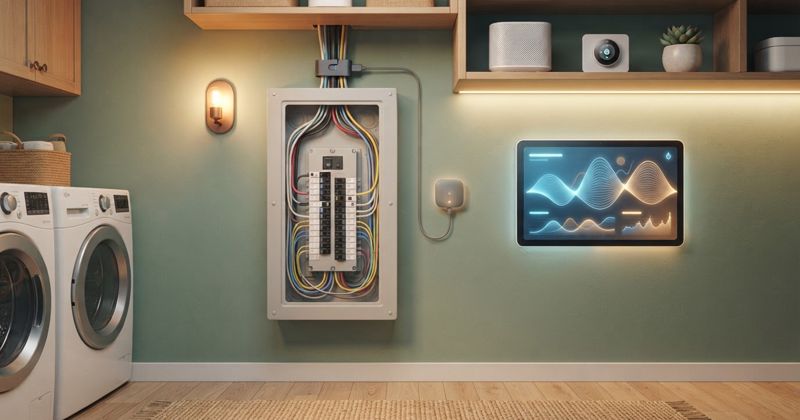
- Water-leak sensors under sinks, the water heater, and behind the washer — these can save thousands by catching a leak in minutes.
- Temperature and presence sensors that let a room react to whether anyone is actually in it.
A water-leak alert that pings your phone the moment a pipe weeps is the kind of "boring" automation that justifies the whole system.
Notifications worth keeping
Notifications are where automations go to become noise. Keep only the ones that prompt action: a door left unlocked at bedtime, a leak detected, a freezer that lost power, a garage still open after dark. If a notification never changes what you do, turn it off. The goal is a phone that stays quiet until something actually needs you.
Bottom line
Skip the demos that impress visitors and build the routines you will forget you have: motion lighting that respects time of day, doors that lock themselves, leak and contact sensors that catch problems early, and notifications that only fire when you need to act. A smart home succeeds when it disappears into the background — which means the best automation is the one you never think about again.