Smart Lighting Ideas That Make a Home Feel Better, Not Flashier
The best smart lighting is not about color party tricks. It is scenes and routines that improve waking up, cooking, relaxing and leaving home.
Table of contents
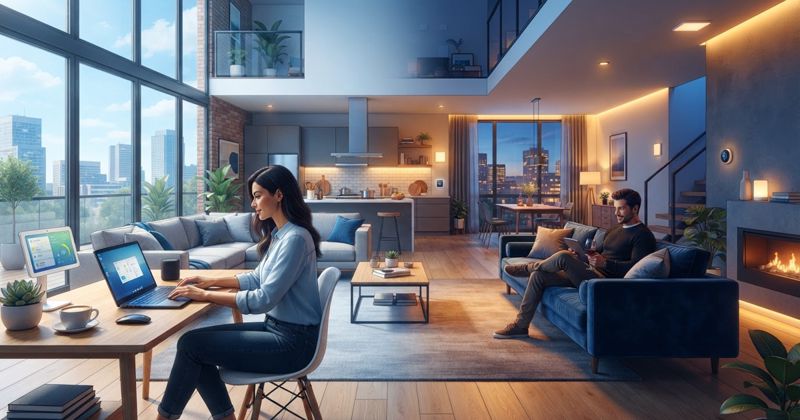
Smart lighting is the most common way people enter the smart home, and also the most commonly wasted. Plenty of homes own color-changing bulbs that only ever turn one shade of white because nobody set up anything beyond an on/off button in an app. The point of smart lighting is not the rainbow demo; it is making ordinary moments — waking up, cooking, relaxing, leaving the house — feel a little better and take a little less thought. This guide is organised around routines and rooms, not product specs.
Color temperature is the real upgrade
Before any automation, the most underused feature is color temperature — how warm or cool the white light is, measured in kelvin. Cool, bluish light feels alert and energising; warm, amber light feels calm and is kinder in the evening. Matching the light to the time of day does more for how a home feels than any color scene:
- Morning and work: cooler, brighter white to help you wake and focus.
- Cooking and daytime tasks: neutral, bright white so you can see clearly.
- Evening and wind-down: warm, dim light that signals the day is ending.
If you do nothing else, set your bulbs to shift from cool in the morning to warm at night automatically. That single routine is what most people actually wanted from "smart" lighting.
Room by room
| Room | Goal | Smart lighting idea |
|---|---|---|
| Bedroom | Gentle starts and ends | A sunrise wake-up scene that brightens slowly; a one-tap "good night" that fades everything off |
| Kitchen | Clear task light | Bright neutral white on a motion sensor so your hands stay free while cooking |
| Living room | Relaxing and movie nights | A warm, dim "relax" scene and a low "movie" scene that cuts glare on the screen |
| Hallway / stairs | Safety at night | Motion-activated dim light so nobody fumbles for a switch in the dark |
| Home office | Focus | Cooler, brighter light during work hours; auto-off when you leave |
| Entryway | Coming and going | A "leaving home" routine that turns everything off, and a "welcome" light at dusk |
Five automations worth setting up
Scenes are manual; automations run themselves. These five deliver the most value for the least fuss:
- Circadian white. Lights shift from cool to warm across the day automatically.
- Motion in transit spaces. Hallways, stairs, bathrooms and the kitchen light up on movement and turn off after a delay.
- Wake-up fade. The bedroom brightens gradually before your alarm.
- Leaving home / coming home. Everything off when the last person leaves; a welcoming light on at dusk.
- Vacation / presence simulation. Lights follow a believable pattern while you are away so the home does not look empty.
Start with one or two. The fastest way to abandon smart lighting is to over-automate so the lights feel unpredictable.
Bulbs, switches or strips?
Choosing the right hardware shape matters as much as the brand:
- Smart bulbs are the easy entry point and great for lamps and color accents. The catch: if someone flips the wall switch off, the bulb loses power and stops being smart.
- Smart switches and dimmers keep control at the wall, which families and guests find more intuitive — but installing them is wiring work and often not an option for renters.
- Light strips are for ambience: behind a TV, under cabinets, along a shelf. They are the "flashier" option, so use them with restraint where indirect light genuinely helps.
- Motion sensors are the cheap secret weapon that turns plain bulbs into hands-free, automatic lighting.
Renters should lean on bulbs, plug-in lamps, strips and sensors, and avoid anything that requires rewiring a switch.
Platform and Matter notes
Lighting is one of the most mature device categories under Matter, the cross-brand standard. The Connectivity Standards Alliance describes Matter as letting devices from different manufacturers work together without being locked to one app or brand, running over Wi-Fi or the Thread mesh and able to work locally rather than relying on the cloud — which, for lighting, means faster, more reliable response and the freedom to control the same bulbs from Apple Home, Google Home or Alexa.
A practical tip from buying guides such as security.org's: pick your ecosystem and hub first, then buy lights that natively support it, rather than collecting bulbs from brands that do not talk to each other. A few bulbs that all respond instantly beat a drawer full of apps.
If you want a full first-purchase plan around your lights, see /best-smart-home-starter-kit-2026
Do you need a hub?
Whether you need a separate hub depends on the bulbs you buy. Wi-Fi bulbs connect straight to your router with no extra box, which is the simplest start but can clutter a busy network if you add many of them. Thread and Zigbee bulbs are designed to mesh together and are gentler on your Wi-Fi, but they need a border router or hub to bridge them into your ecosystem — sometimes that hub is already built into a smart speaker or display you own. Before buying a brand of bulb, check what it needs to reach your phone and voice assistant, so you are not surprised by a required accessory after the fact.
Common mistakes to avoid
A few easy missteps spoil otherwise good setups. Over-saturating with color makes rooms feel like a nightclub rather than a home; reserve color for accents and keep the main lights on tuned whites. Automating too aggressively so lights flick on and off unpredictably trains the household to reach for the switch and bypass the system entirely. And mixing too many brands that do not share an ecosystem leaves you juggling apps with inconsistent response times. The homes that love their smart lighting keep it restrained, predictable and unified — the lights do their job without anyone narrating it.
Bottom line
Good smart lighting is quiet, not flashy. Get the color temperature right across the day, add a handful of automations for the routines you repeat — waking, cooking, relaxing, leaving — and choose bulbs, switches or strips based on whether you rent and how people actually use each room. Prefer Matter-capable lights tied to one ecosystem, and your home will simply feel better lit without anyone thinking about it.