Smart Speakers vs Smart Displays: Which Hub Should You Buy?
Smart speakers and displays share a brain, but the screen changes price, privacy, and best use. Compare voice control, camera views, ecosystem lock-in, and which to put in which room.

Table of contents
Every smart-home ecosystem wants you to start with one of two devices: a smart speaker or a smart display. They share a brain — the same voice assistant, the same routines — but one adds a screen, and that screen changes the price, the privacy picture, and what the device is good for. This guide compares them honestly so you put the right one in the right room.
What they have in common
Both speakers and displays run a voice assistant (Alexa, Google Assistant, or Siri depending on the brand), play music, answer questions, set timers, and control your smart-home devices by voice. Many recent models from the major ecosystems also double as smart-home hubs — including acting as a Thread border router, which lets low-power Matter-over-Thread devices join your network. If hub duty matters to you, check the specific model; support varies by generation.
Where a display pulls ahead
The screen is not just for show. A smart display adds:
- Camera views. Glance at a doorbell or security camera feed without reaching for your phone.
- Visual feedback. See timers, recipes, weather, calendars, and the results of a question instead of only hearing them.
- Video calls. Most displays include a camera and microphone for calling.
- Touch control. Tap to adjust lights or run a routine when speaking aloud is awkward.
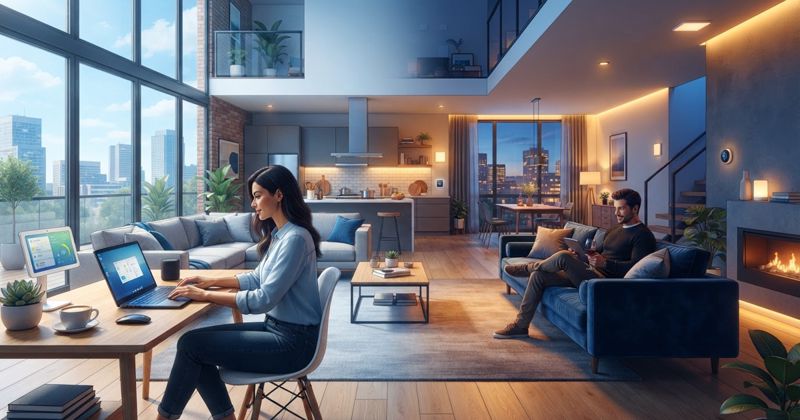
These make displays strong choices for kitchens (recipes, timers, camera views) and entryways or central rooms where seeing camera feeds is genuinely useful.
Where a plain speaker wins
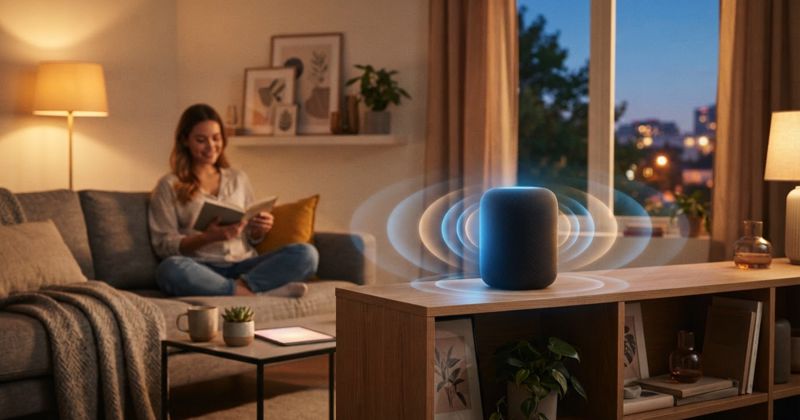
A smart speaker is cheaper, simpler, and — for many people — more comfortable to live with. Without a camera, it removes an entire category of privacy worry from a bedroom or bathroom. It can sound better per dollar since the budget goes to audio rather than a screen. And it does everything voice-first that a display does for smart-home control. For bedrooms, hallways, and rooms where you only need voice and music, a speaker is often the smarter buy.
Speaker vs display at a glance
| Factor | Smart speaker | Smart display |
|---|---|---|
| Price | Lower | Higher |
| Camera / video calls | No | Usually yes |
| Camera-feed viewing | No | Yes |
| Best rooms | Bedroom, hallway | Kitchen, central rooms |
| Privacy footprint | Smaller (no camera) | Larger (camera + screen) |
| Often acts as hub | Some models | Some models |
The privacy angle
Both device types listen for a wake word, and both let you mute the microphone. A display adds a camera, which is the bigger consideration — many include a physical shutter or off switch precisely because people are wary of a camera in private spaces. The simple rule: avoid putting a camera-equipped display in a bedroom or bathroom, and use the mic mute and camera shutter on any unit when you want certainty. If a camera in the room is a dealbreaker, a speaker sidesteps the issue entirely.
The ecosystem lock-in reality
Whichever you choose, you are also choosing an ecosystem. The assistant, routines, and tight integrations are easiest within one brand's world, and moving later means relearning apps and re-pairing devices. Matter eases this by letting many devices work across ecosystems, but the speaker or display itself ties you to its assistant. Pick the assistant that matches the phones and services your household already uses, because that decision outlasts the hardware.
Bottom line
Buy a smart display for rooms where a screen earns its keep — kitchens and central spaces where camera feeds, recipes, and video calls add real value. Buy a smart speaker for bedrooms, hallways, and anywhere you want voice control without a camera, lower cost, or better sound for the money. Either way, choose the ecosystem deliberately, and check whether the model can serve as a Thread border router if you plan to grow.