Smart Home Security Checklist After a Major Credential Leak
A calm, ordered checklist for a connected home after a big leak: router password, vendor accounts, multi-factor authentication, firmware updates and shared household access — no new hardware required.
Table of contents
When a huge credential leak makes the news, the useful response is not panic — it is a short, ordered checklist you can finish in an evening. This is that list, written for a connected home, where the accounts that matter are your router, your device vendors and the people who share the house with you.
Start at the gateway: the router password
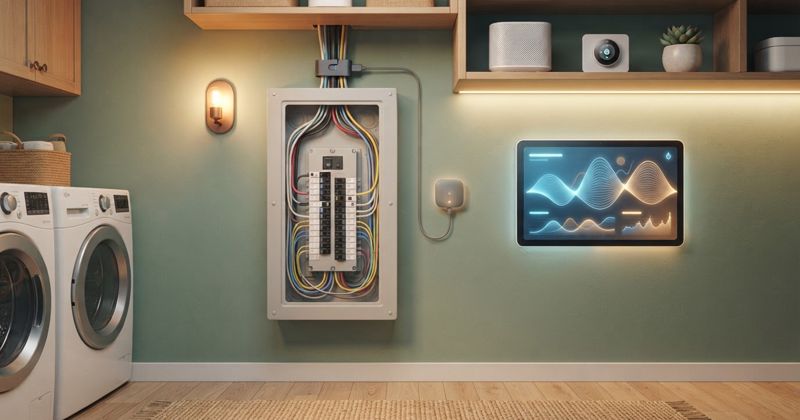
The single most valuable change after any credential scare is the router admin password. The router controls DNS, port forwarding, firmware and every device on the network, yet its admin login is the account people forget exists. If yours is still the factory default, or shares a password with anything else, change it to a unique one now.
While you are in the router panel, do three more things: confirm the firmware is current (router makers patch remotely exploitable bugs regularly), rotate the Wi‑Fi password if it was ever reused or shared widely, and move untrusted gadgets onto a guest network so a compromised device cannot see the rest. We explain why the router outranks every gadget in our companion piece.
Why Your Router Is More Important Than Any Smart Gadget You Own
Audit and rotate vendor accounts
Each smart‑home brand is a separate login, and a major leak — like the roughly 24 billion records Cybernews reported in June 2026, mostly infostealer logs pairing emails with passwords — is dangerous only where you reused a password. Work through your vendors and give each a unique password:
| Account type | Priority | Why |
|---|---|---|
| Email (recovery address) | Highest | Resets every other account |
| Router admin / Wi‑Fi | Highest | Controls the whole network |
| Smart lock | High | Physical access to the home |
| Indoor cameras / doorbell | High | Live and recorded video |
| Voice assistant | Medium | Linked accounts and routines |
| Other gadgets (lights, plugs) | Lower | Limited blast radius |
Do email first — it is the reset path for everything below it — then the lock and any camera that streams inside the home. A reputable breach‑check service such as Have I Been Pwned tells you whether an email appears in known dumps; treat a hit as a prompt to rotate, not proof a device was breached.
Turn on multi‑factor authentication
A leaked password is only useful if it is enough to log in. Multi‑factor authentication (MFA) breaks that by requiring a second factor — an app code or hardware key — so a stolen password alone fails. Enable it on every account that offers it, starting with email, the smart‑lock account and any camera account. Prefer an authenticator app over SMS where you have the choice, since app‑based codes are not exposed by SIM‑swap attacks. This is the highest‑leverage step on the list after fixing the router.
Update firmware on the devices themselves
Leaks travel alongside known vulnerabilities. The 2026 "FortiBleed" disclosure showed how an old, unpatched flaw — CVE‑2022‑40684, fixed by Fortinet back in October 2022 — kept producing working logins years later because devices were never updated. The home lesson is the same: open each vendor app and apply pending firmware updates to your router, cameras, locks and hub. Patched bugs only protect you once installed, and an unpatched edge device is exactly the kind of foothold these operations harvest.
Review shared household access
Smart homes are multi‑person systems, and shared access is the step most checklists skip. After a leak:
- List who has access to each device or account — family, guests, an ex‑roommate, a former house‑sitter — and revoke anyone who no longer needs it.
- Reissue guest PINs on smart locks and delete stale ones; codes shared by text or note are easy to lose track of.
- Check linked accounts on your voice assistant and camera apps, and remove old phones or integrations you no longer use.
- Use proper sub‑accounts rather than sharing your master password, so you can remove one person without resetting everyone.
This matters because a leaked credential is not the only way in — a forgotten guest code or an over‑privileged family login is a quieter version of the same risk.
FAQ
What should I do first after a big leak?
Change the router admin password and confirm it is unique, then rotate your email password and enable MFA on email. Those three steps cover the accounts with the widest reach.
Do I need to replace any devices?
Usually no. Most exposure is fixed by changing reused passwords, enabling MFA and updating firmware. Replace a device only if the maker has stopped issuing security updates.
Is SMS two‑factor good enough?
It is far better than nothing, but an authenticator app or hardware key is stronger because it resists SIM‑swap attacks. Use app‑based MFA where the vendor supports it.
How often should I run this checklist?
After any major leak you hear about, and otherwise once or twice a year. Firmware updates and a quick shared‑access review are worth doing on a routine schedule.
Bottom line
A credential leak is a deadline, not a disaster. Work top‑down: secure the router, give every vendor account its own password, switch on MFA, update firmware, and clean up shared access. None of it requires new hardware — and finishing the list turns a scary headline into a quiet, well‑locked house.
Sources and further reading
Sources
- Cybernews: 24 billion records exposed in colossal data leak cybernews.com
- Cybernews: Hackers build database of 30,000 working Fortinet logins cybernews.com
- CISA: Urges hardening Fortinet devices after reports of credential exposure cisa.gov