How to Organize Rooms, Device Names, and Automations in a Growing Smart Home
One smart bulb is easy. Forty devices across six rooms is where things get messy. A naming and organization system keeps voice control, automations, and your family's patience intact as the home grows.
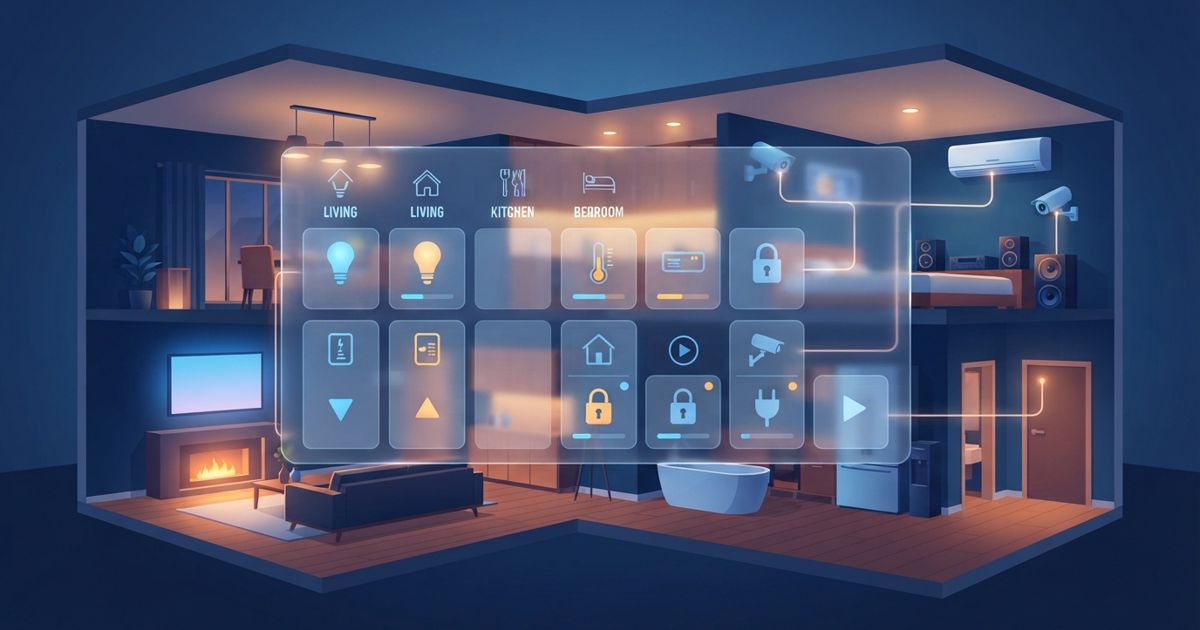
Table of contents
The first few smart devices are effortless. You name a bulb "Lamp," add a plug, tell your assistant to turn things off, and it works. Then the collection grows — bulbs in every room, sensors, plugs, a couple of speakers, a lock — and one day a simple "turn off the lights" command shuts down the wrong room, or an automation fires at 2 a.m. for no clear reason. The culprit is almost never the hardware. It's organization. A little structure early on saves hours of confusion later, and it's the difference between a home that feels effortless and one that feels like a part-time job.
Start with rooms, because everything hangs off them
Every major platform is built around the idea of a room or area. Rooms are not just labels — they power voice commands ("turn off the bedroom"), scoped automations, and the layout of your app. Get them right before you add devices.
- Mirror your real floor plan. Use the names your household actually says out loud: "Kitchen," "Living Room," "Kids' Room." Don't invent clever zone names nobody remembers.
- Split large spaces if you control them separately. An open-plan kitchen and dining area might be one room in real life but two in your app if you want to light them independently.
- Assign every device to a room, even sensors. A motion sensor with no room can't participate in "if someone's in the hallway" logic cleanly.
Once rooms match how you talk and move through the house, voice control gets dramatically more reliable, because the assistant can scope commands to a place instead of guessing.
A naming convention you'll actually stick to
Device names are where growing homes fall apart. The trick is to pick a pattern and apply it everywhere, so you never have to guess what a device is called mid-sentence.
A simple, durable pattern is location + device type + qualifier:
- "Kitchen Ceiling Light"
- "Living Room Lamp Left"
- "Bedroom Fan"
- "Front Door Lock"
Follow a few rules and stay consistent:
- Say it the way you'd speak it. If you'd never say "Luminaire 3," don't name it that.
- Avoid duplicate or near-duplicate names. Two devices called "Light" force the assistant to disambiguate or pick wrong.
- Skip numbers and codes unless you genuinely have identical fixtures to distinguish.
- Don't bury the device type. "Reading Nook" is charming but unclear; "Reading Nook Lamp" tells the assistant what to do.
Groups are the companion to good names. Create a group like "Downstairs Lights" or "All Fans" so common commands hit several devices at once without you listing them. Groups also make automations shorter and easier to read.
Keep automations understandable, not just clever
As the device count climbs, so does the temptation to automate everything. But every automation you add is something future-you has to remember and debug. The goal is a small set of automations that each do one obvious thing.
- Name automations by what they do, not what they are: "Lights off when everyone leaves," not "Automation 7."
- Prefer a few reliable routines over many fragile ones. A morning routine, an away routine, and a bedtime routine cover most of daily life.
- Write down triggers and conditions somewhere. When an automation misfires months later, you'll want to know why it exists.
- Avoid overlapping automations that fight each other — one turning lights on for motion while another turns them off on a schedule is a classic 2 a.m. mystery.
For the difference between automations that genuinely help and ones that just show off, our guide on creating useful automations instead of gimmicks goes deeper on which ones are worth keeping.
Handle the multi-platform reality
Growing homes rarely stay on one app. You might have a lock in one ecosystem, cameras in another, and a voice assistant on top. Two habits keep this manageable:
- Name a device identically everywhere it appears. If it's "Garage Light" in one app, don't let it become "Garage Bulb" in another. Mismatched names break voice control and confuse cross-platform automations.
- Pick one place as your source of truth for automations when possible. Spreading logic across three apps means three places to check when something breaks. If you're setting up interoperable gear, our walkthrough on setting up Matter devices without confusion helps keep names and rooms aligned from the start.
Do a seasonal cleanup
Smart homes accumulate clutter the way closets do. A few times a year, spend twenty minutes tidying:
- Remove ghost devices — anything unplugged, replaced, or no longer connected. Stale entries clog voice control and app menus.
- Re-check room assignments after you've moved furniture or devices.
- Prune automations you no longer use. If you can't remember what one does, it's a candidate for deletion.
- Confirm names still make sense. The "New TV" you named two years ago is just "TV" now.
When devices keep dropping instead of just being disorganized, that's a different problem — our troubleshooting checklist covers the network and radio causes behind unreliable connections.
The payoff
Organization isn't the fun part of a smart home, but it's what makes the fun parts work. Rooms that match your floor plan, names you'd actually say aloud, groups for common commands, and a lean set of well-labeled automations turn a sprawling collection of gadgets into something the whole household can use without a manual. Set the system up once, tidy it occasionally, and the home scales with you instead of against you.